Article by: Nur Hidayahanum Hamid
Source: University of California - Riverside
A new study reveals that a parasite still affecting modern oysters has been carrying out the same behavior for 480 million years. Using high‑resolution micro‑CT scanning, researchers examined exceptionally preserved fossil shells from Morocco and discovered repeated question‑mark‑shaped burrows etched on and inside the shells. These traces match those made by modern spionid worms, soft‑bodied marine bristle worms that bore into oyster and mussel shells. Although they do not consume the animals’ flesh, their burrowing weakens shells and increases mortality an issue still seen in aquaculture today.
The fossils date back to the Ordovician Period, a time of rapidly evolving marine ecosystems with increasing predation and parasitism. After ruling out alternative explanations, the researchers confirmed that the markings were nearly identical to modern spionid traces. The finding shows that this parasitic behavior has remained virtually unchanged for nearly half a billion years, surviving multiple mass extinctions and continuing to impact shellfish today.
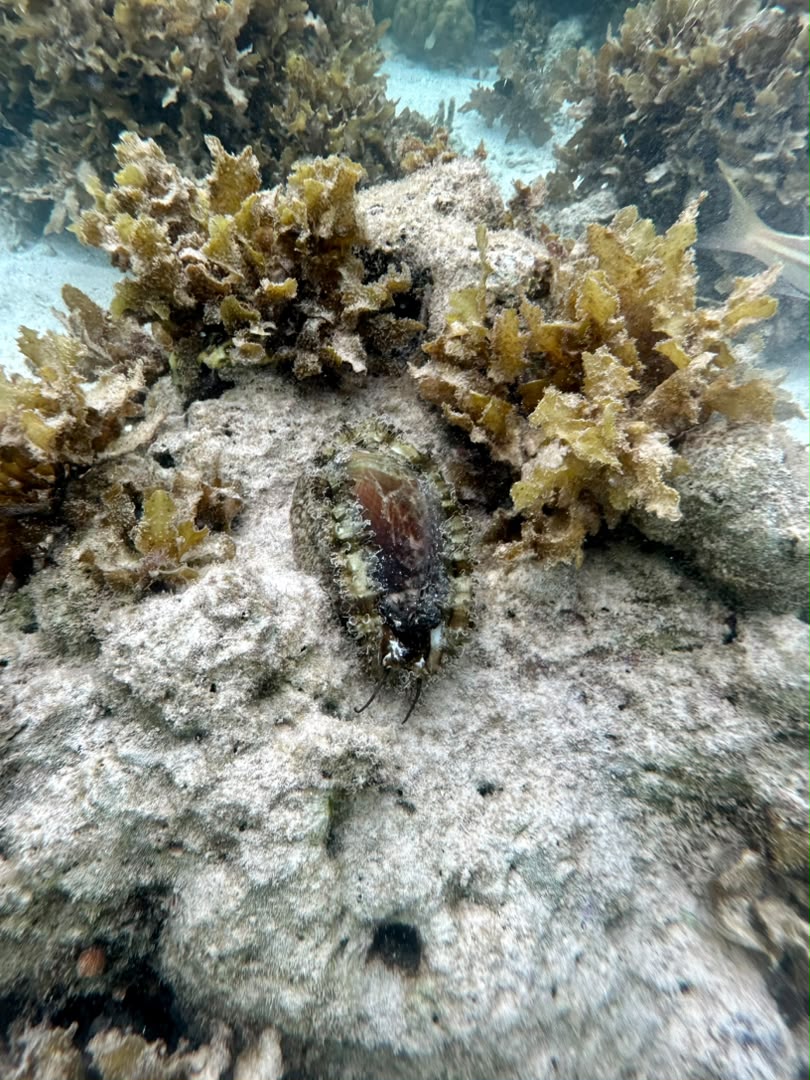
 Picture 1: Adult marine shell-boring spionid polychaete. Credit: Vasily Radishevsky/ Far Eastern Branch of the Russian Academy of Sciences
 Picture 2: Spionid traces on fossilized bivalve shells. Credit: Javier Ortega-Hernandez / Harvard University
References:
- https://fishfocus.co.uk/480-million-year-old-parasite-still-infects-oysters-today/
- https://phys.org/news/2025-11-million-year-parasite-plagues-today.html
- https://news.ucr.edu/articles/2025/11/04/half-billion-year-old-parasite-still-threatens-shellfish
- https://www.sciencedaily.com/releases/2025/11/251105050710.htm
- https://linkinghub.elsevier.com/retrieve/pii/S2589004225019820
- https://link.springer.com/chapter/10.1007/978-3-030-52233-9_1
- https://link.springer.com/chapter/10.1007/978-3-030-42484-8_7
- https://www.nature.com/articles/s41467-020-16332-3
- https://academic.oup.com/icb/article-abstract/9/3/689/223719?redirectedFrom=fulltext&login=true
- https://chooser.crossref.org/?doi=10.1144%2Fjgs2015-017
- https://link.springer.com/article/10.1007/s12542-021-00554-x
- https://onlinelibrary.wiley.com/doi/10.1111/pala.12129
- https://www.sciencedirect.com/science/article/pii/S0031018215007427?via%3Dihub
- https://www.sciencedirect.com/science/article/pii/S0012825220305109?via%3Dihub
- https://royalsocietypublishing.org/rsbl/article/17/1/20200809/62836/A-new-somasteroid-from-the-Fezouata-Lagerstatte-in
- https://www.frontiersin.org/journals/ecology-and-evolution/articles/10.3389/fevo.2023.1290063/full
- https://link.springer.com/article/10.1007/BF00394366
- https://www.mdpi.com/2079-7737/12/6/780
- https://link.springer.com/article/10.1007/s10499-022-00971-y
- https://mapress.com/zt/article/view/zootaxa.1353.1.1
Date of Input: 12/12/2025 | Updated: 12/12/2025 | hidayahanum
MEDIA SHARING