Article prepared by: Dr. Izwaharyanie Ibrahim
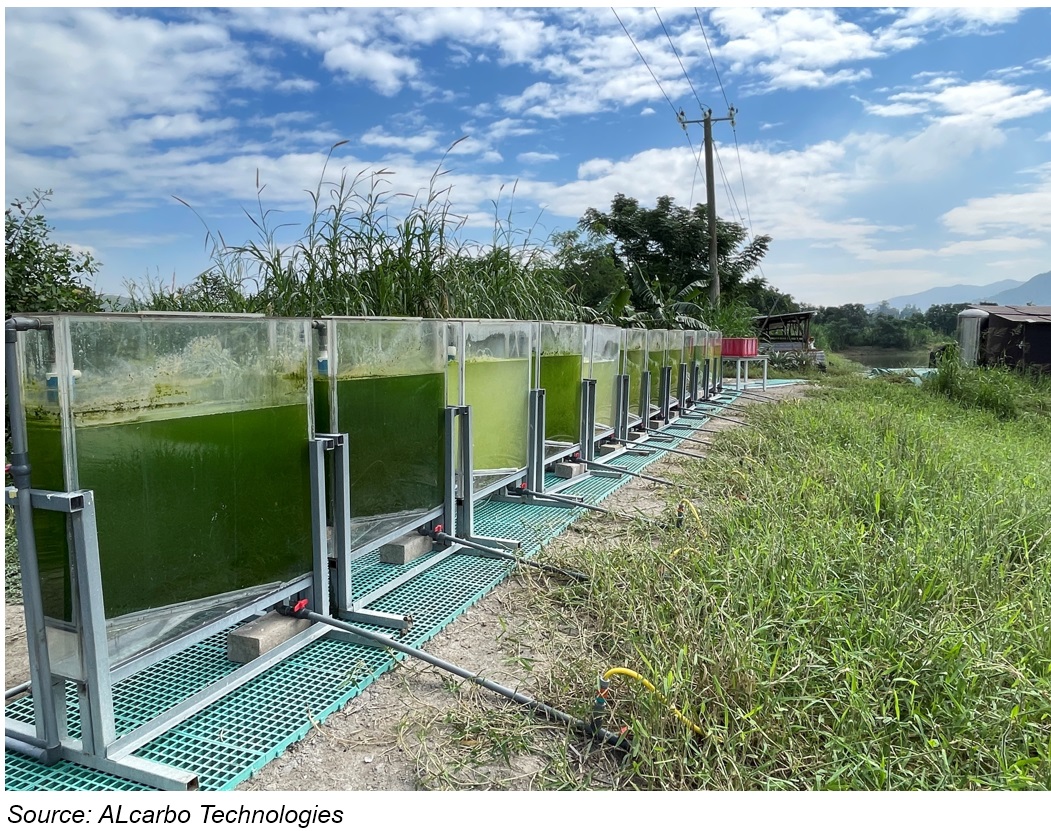
Source: Alcarbo Technologies
As the world continues to address rising carbon dioxide (COâ‚‚) emissions, innovative approaches to carbon capture are becoming increasingly important. One promising solution comes from an organism that has existed for billions of years: algae.
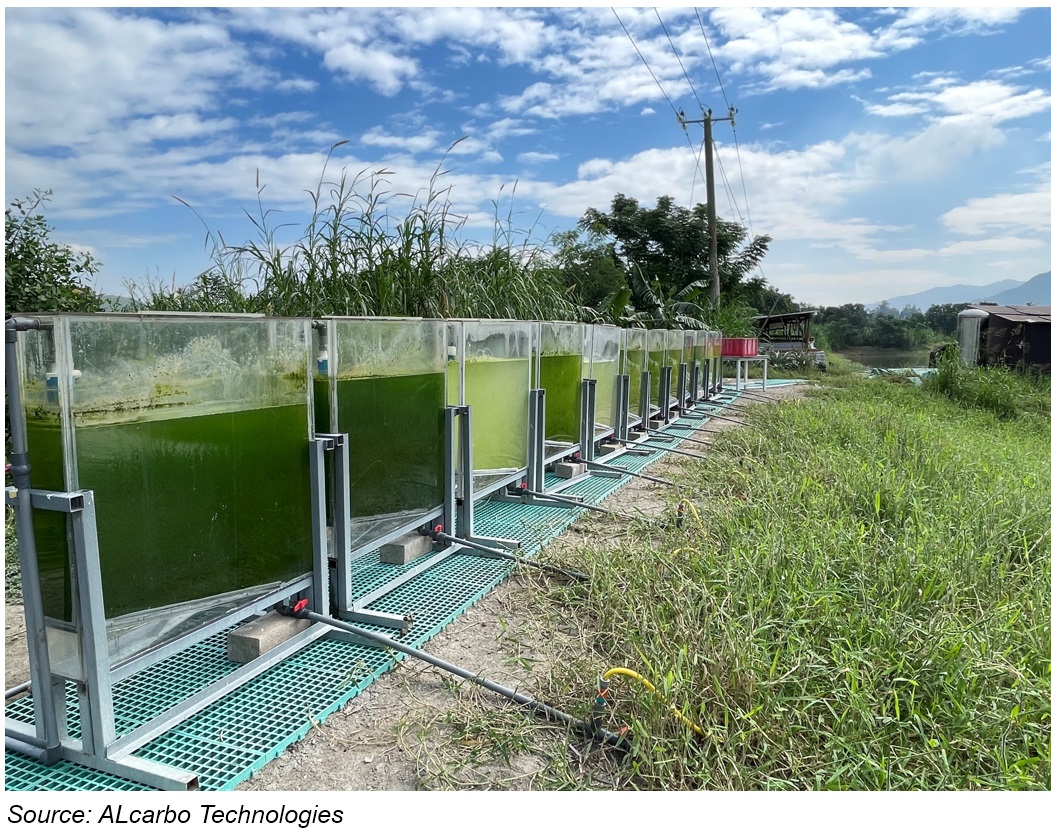
Algae are highly efficient photosynthetic organisms that naturally absorb COâ‚‚ and convert it into biomass and oxygen. Recognising this potential, ALcarbo Technologies has developed an algae-based photobioreactor (PBR) system designed to capture COâ‚‚ while producing useful algae biomass.
Harnessing the Power of Algae
According to ALcarbo Technologies, algae can capture COâ‚‚ at a much higher rate than trees. The company estimates that algae can absorb approximately 40 times more COâ‚‚ than trees, highlighting their potential as a compact biological solution for carbon capture.
Unlike forests, which require substantial land areas, algae can be cultivated in controlled systems using relatively limited space. This makes algae particularly attractive for densely developed areas where land availability is a major constraint.
The company estimates that an area equivalent to one volleyball court of its photobioreactor system could capture an amount of COâ‚‚ comparable to approximately one acre of forest.
How Does the Technology Work?
ALcarbo Technologies' system combines three main technological components:
- Nanobubble photobioreactors to improve COâ‚‚ delivery to algae;
- Specialised culture media to support efficient algae growth; and
- Selected algae strains and mutants with enhanced carbon-fixing capabilities.
The photobioreactor provides a controlled environment where algae can grow efficiently while continuously interacting with COâ‚‚.
One of the key innovations is the use of nanobubble technology. By producing very small bubbles, the system can improve the diffusion of COâ‚‚ into the culture medium, allowing more COâ‚‚ to become available to the algae compared with conventional gas-diffusion approaches.
The system is also equipped with online monitoring and automated operation, allowing algae cultivation to be managed more efficiently.
Developing High-Performance Algae
Beyond reactor design, ALcarbo Technologies also focuses on selecting algae with high carbon-fixing potential.
The company screened algae strains from a large diversity of species and used molecular biology approaches to identify strains with desirable characteristics. It also applied mutagenesis to generate genetic variation and subsequently selected promising mutants based on their characteristics and genetic analysis.
These selected strains, described by the company as “Super carbon-fixing mutants,” are intended to provide higher COâ‚‚ capture performance.
The development of a customised culture medium is another important component, as reducing the cost of algae cultivation is essential for making the technology commercially viable.
From Carbon Capture to Valuable Products
An important feature of algae-based carbon capture is that the captured carbon does not necessarily remain only as a waste stream.
Through photosynthesis, algae convert COâ‚‚ into biomass. This biomass can potentially be used for a variety of applications, including aquaculture feed, biofuel production and nutritional supplements.
ALcarbo Technologies currently supplies algae products to customers including fish farmers, university research groups and biotechnology companies. The company views these applications as an opportunity to create additional value from the carbon capture process.
This creates an interesting concept: capturing carbon while producing useful biological resources.
Current Performance and Future Potential
The company reports that its photobioreactor has achieved a COâ‚‚ capture rate of approximately 0.54 g/L/day. Based on this performance, ALcarbo Technologies estimates that its PBR system could achieve carbon capture comparable to forested areas while requiring substantially less physical space.
The technology is particularly relevant to cities and industrial areas where large-scale land-based carbon sinks may be difficult to establish.
However, scaling remains an important challenge. The company has identified space availability, production costs, algae cultivation and infrastructure development as some of the practical challenges encountered during the development of its technology.
Towards Southeast Asia and Beyond
ALcarbo Technologies plans to further scale its operations in Hong Kong before expanding its production facilities to other parts of Southeast Asia.
This regional expansion could be particularly relevant for tropical countries, where sunlight and suitable environmental conditions may provide opportunities for algae cultivation. Nevertheless, successful deployment would require careful assessment of local conditions, system economics, carbon accounting and environmental impacts.
Why Is This Technology Important?
Algae-based carbon capture represents an example of how biological processes can be combined with engineering and biotechnology to address environmental challenges.
Rather than relying solely on conventional mechanical or chemical carbon capture systems, algae-based approaches use photosynthesis as the fundamental carbon-fixing mechanism. Advanced photobioreactors can then optimise the conditions required for efficient algae growth and COâ‚‚ uptake.
The technology also demonstrates the potential of a circular approach, where captured COâ‚‚ is converted into biomass that may subsequently be used as a resource.
Conclusion
The development of algae-based photobioreactors offers an innovative pathway for carbon management, particularly in land-constrained urban and industrial environments. By combining algae cultivation, nanobubble technology, biotechnology and automated monitoring, ALcarbo Technologies is exploring how nature's carbon-fixing capability can be enhanced through engineering.
Although challenges remain in scaling, cost reduction and commercial deployment, algae-based systems demonstrate an important principle for future sustainability: carbon capture does not always have to mean simply storing carbon—it can also create valuable biological resources.
The continued development and demonstration of such technologies will be important in determining how effectively algae can contribute to future carbon reduction strategies.
References
- https://cwrrr.org/interviews/alcarbo-technologies-capturing-carbon-with-algae/
- Pengarah I-AQUAS
- Timbalan Pengarah I-AQUAS
- Ketua Laboratori Ekosistem dan Pengurusan Akuatik
- Ketua Laboratori Akuakultur Mampan
- Web I-AQUAS UPM
- Siswazah I-AQUAS
- â â Web Universiti Putra Malaysia
- â â Kementerian Pendidikan
- Jabatan Perikanan Malaysia
- Mosti Malaysia
- â Research officer- Mohd Fakhrulddin Ismail
- Research Officer – Dr. Izwaharyanie Ibrahim
- Research Officer – Dr. Nur Hidayahanum Hamid
- Media Sosial I-AQUAS – Tiktok
- Media Sosial I-AQUAS – Twitter
- Media Sosial I-AQUAS – Facebook
- Media Sosial I-AQUAS - Instagram
- Media Sosial I-AQUAS - Youtube
- Google Place
Date of Input: 13/08/2026 | Updated: 19/08/2026 | izwaharyanie
MEDIA SHARING