Article by: Nur Hidayahanum Hamid
Source: University of British Columbia
A new study by the University of British Columbia (UBC) projects a 16% global decline in farmed seafood, such as salmon and mussels, by 2090 if climate change is not mitigated. Ocean-farmed seafood, or mariculture, is often seen as a solution to depleted wild fish stocks and increasing human demand. However, the study shows that mariculture is vulnerable to climate change. If fossil fuel consumption continues at the current rate, sustainable seafood farming will increase by only 8% by 2050 and decline by 16% by 2090. Conversely, in a low-emissions scenario, mariculture could grow by 17% by mid-century and 33% by the century's end.
The model considers factors like ocean temperatures, suitable future mariculture areas, and the supply of fishmeal and fish oil, analyzing about 70% of the world's 2015 mariculture production. Climate change will impact mariculture differently across regions and products. High-emission scenarios could see significant declines in production in Norway, Myanmar, Bangladesh, the Netherlands, and China, with reductions up to 40-90%.
Fish farms rely on fishmeal and fish oil, derived from smaller fish like herring and anchovy, which are also climate-sensitive. Regions producing more bivalves (mussels, oysters, clams) will be less affected, while finfish farming (e.g., salmon) will suffer more due to decreased fishmeal and fish oil supplies. Under current emission rates, finfish farming is projected to decrease by 3% by 2050 and 14% by 2090, while bivalve farming may increase by 2050 but decline by 2090 under both scenarios.
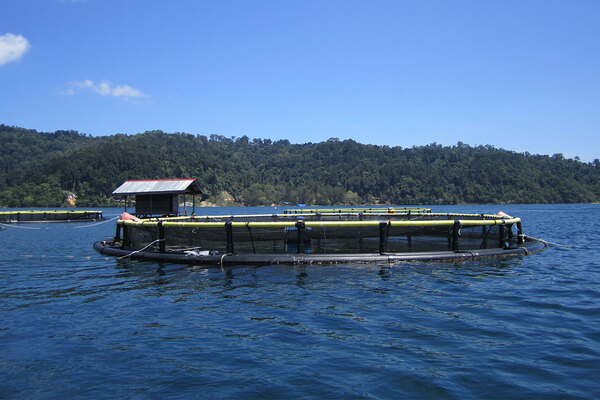
Picture 1: Marine fish farming in cages in Sabah, Malaysia (Photo credit: Bayu Aquaculture)

Picture 2: Grouper fish farming in cages (Photo credit: Bayu Aquaculture).
Date of Input: 11/07/2024 | Updated: 11/07/2024 | hidayahanum
MEDIA SHARING