The paper explores the transformative role of the Internet of Things (IoT) in modern aquaculture practices, presenting an in-depth review of its core applications and emerging technologies. It highlights how IoT solutions—such as real-time water quality monitoring, automated feeding systems, fish behavior analysis, and disease detection—are revolutionizing fish farming operations. These technologies allow for continuous environmental monitoring, efficient resource management, and rapid response to potential threats, which significantly enhance productivity and sustainability. Figure 1 shows overview of IoT applications in aquaculture. The study emphasizes the integration of various sensors, cloud computing, and intelligent analytics, which collectively help aquaculture practitioners optimize operations while minimizing labor and environmental impact. Figure 2 shows flow of IoT implementation for managing water quality in aquaculture. Several challenges impeding widespread IoT adoption in aquaculture, including issues related to connectivity in remote areas, system interoperability, data security, and high initial investment costs. Besides, Figure 3 shows Integrated IoT system for enhanced and intelligent aquaculture. It outlines the need for standardized protocols, reliable network infrastructure, and cost-effective solutions tailored to small and medium-scale farmers. In conclusion, with proper implementation and policy support, IoT can serve as a critical enabler in achieving a more efficient, resilient, and sustainable aquaculture industry.
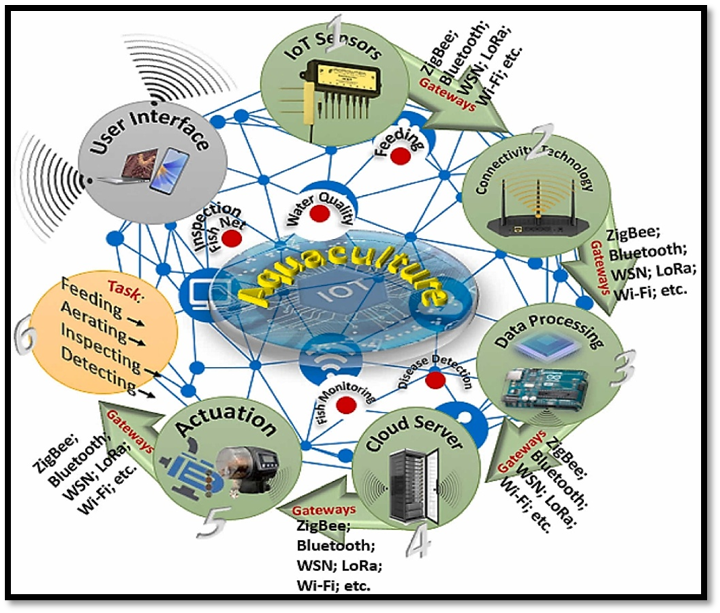 Figure 1: Overview of IoT Applications in Aquaculture.
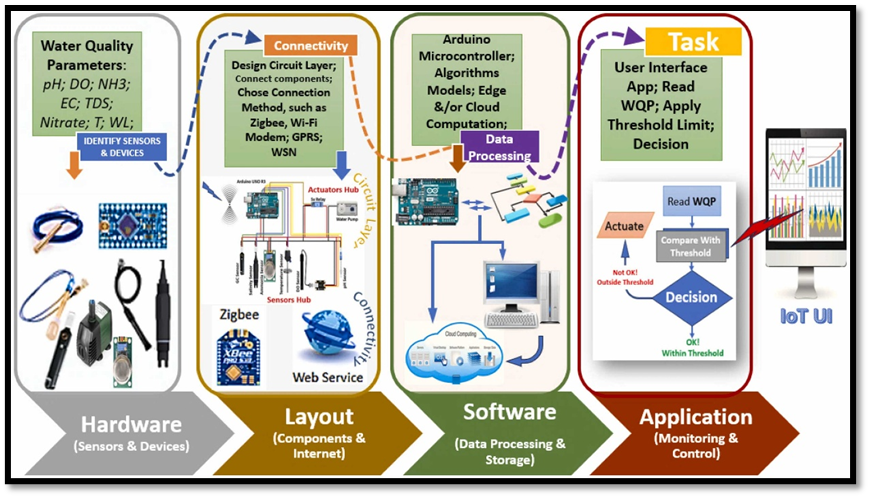 Figure 2: Flow of IoT Implementation for Managing Water Quality in Aquaculture.
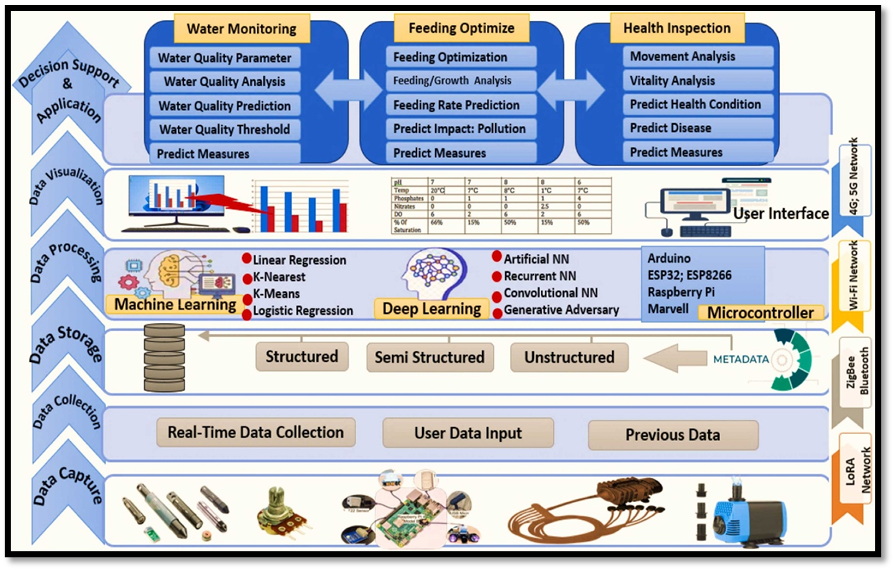 Figure 3: Integrated IoT System for Enhanced and Intelligent Aquaculture.
References
- https://www.sciencedirect.com/science/article/pii/S2352513424004460
- https://onlinelibrary.wiley.com/doi/10.1111/raq.12870
- https://link.springer.com/article/10.1007/s12571-021-01246-9
- https://www.tandfonline.com/doi/full/10.1080/19361610.2021.1962677
- https://onlinelibrary.wiley.com/doi/10.1111/jwas.12950
- https://ejournal.sultanpublisher.com/index.php/komets/article/view/98
- https://www.sciencedirect.com/science/article/abs/pii/S0029801822024854?via%3Dihub
- https://onlinelibrary.wiley.com/doi/10.1155/2023/4399512
- https://irojournals.com/jucct/article/view/5/2/4
- https://link.springer.com/chapter/10.1007/978-981-99-1051-9_17
- https://ieeexplore.ieee.org/document/10251529
- https://www.sciencedirect.com/science/article/pii/S2772375523000175?via%3Dihub
- https://onlinelibrary.wiley.com/doi/10.1111/raq.12857
- https://www.sciencedirect.com/science/article/pii/S0957417423023436?via%3Dihub
- https://journal.eu-jr.eu/engineering/article/view/2745
- https://onlinelibrary.wiley.com/doi/10.1111/jwas.12966
- https://www.sciencedirect.com/science/article/abs/pii/S0013935123019515?via%3Dihub
- https://www.sciencedirect.com/science/article/abs/pii/S0168169922008882?via%3Dihub
- https://www.sciencedirect.com/science/article/pii/S0022169422009040?via%3Dihub
- https://www.sciencedirect.com/science/article/pii/S0168169922005178?via%3Dihub
Date of Input: 29/08/2025 | Updated: 11/11/2025 | omarsyafiq
MEDIA SHARING