Article by: Nur Hidayahanum Hamid
Source: Forschungsverbund Berlin
Fungal and fungal-like diseases pose a significant threat to aquatic organisms in marine and freshwater systems worldwide, impacting aquaculture and amphibian biodiversity. Current chemical treatments are limited, often harmful to the environment, and ineffective in the long term. Scientists at the Leibniz-Institute of Freshwater Ecology and Inland Fisheries (IGB) propose alternative biological methods to control these diseases in a more sustainable and eco-friendly manner.
These diseases produce zoospores, small infectious agents that swim through water to infect hosts such as fish, amphibians, and even algae used for human consumption. Dr. Thijs Frenken, lead author of the study, highlights the substantial damage caused by these pathogens, noting that existing chemical treatments are costly, environmentally damaging, and often ineffective. Diseases are a major cause of economic losses in aquaculture, with at least 10% of hatched salmon succumbing to zoosporic infections, resulting in millions of dollars in annual losses.
The researchers propose seven biological concepts to protect aquatic organisms:
- Reduce pathogen transmission by controlling distribution pathways and vectors.
- Increase host species diversity to lower infection risks in genetically homogeneous populations.
- Vaccination and immunization though no vaccines for fungal-like diseases currently exist, this remains a promising avenue.
- Stimulate host defenses by enhancing the production of anti-fungal peptides.
- Probiotics to inhibit zoospore growth and prevent their attachment to hosts.
- Hyperparasitism introducing another parasite to target and eliminate the disease-causing pathogen.
- Use "parasite eaters" such as zooplankton that naturally consume parasitic fungi.
Prof. Dr. Justyna Wolinska emphasizes the importance of understanding parasite-host interactions in changing environments and hopes this research will inspire the development of safe, sustainable biological control strategies. Further work is needed to implement these methods effectively in natural habitats without unforeseen risks.
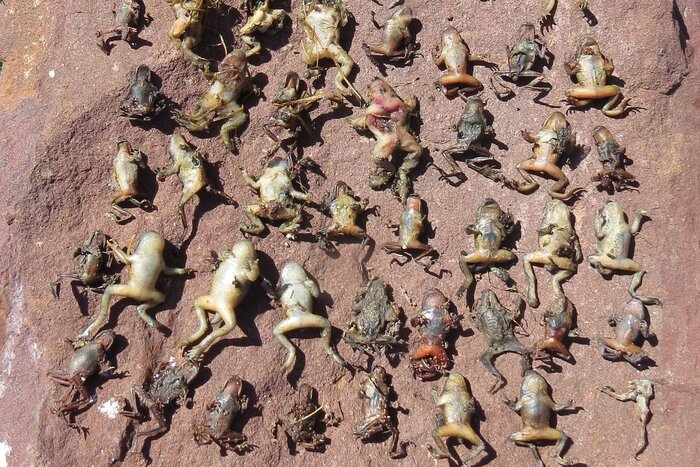
Picture 1: Mass mortalities of an alpine (Pyrenees) population of the midwife toad (Alytes obstetricans) caused by a chytrid (Batrachochytrium dendrobatidis) epidemic. Credit: Dirk S. Schmeller
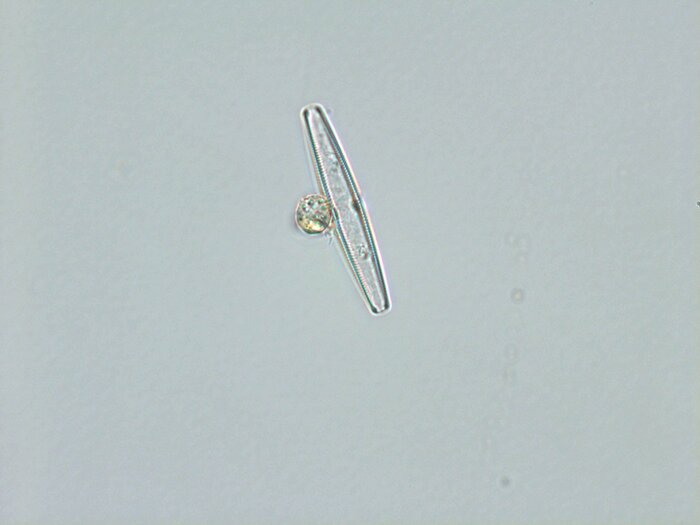
Picture 2: Alga with an infection that is almost matured (the circle in the image). Inside the infection, zoospores are visible (the small green spot) that will soon be released into the water, ready to find new algae to infect. Credit: Thijs Frenken
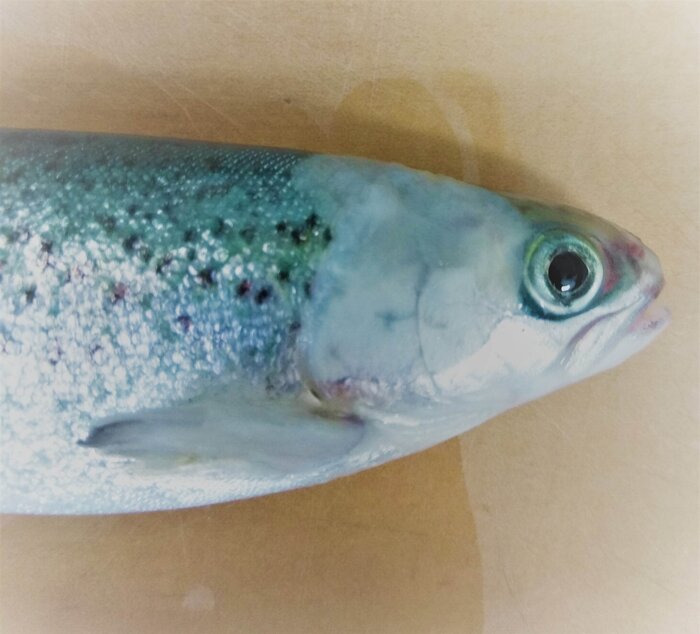
Picture 3: Salmon parr (Salmo salar) infected with the oomycete Saprolegnia parasitica. Credit: Kostis Apostolakis
Date of Input: 12/02/2025 | Updated: 12/02/2025 | hidayahanum
MEDIA SHARING