Article by: Nur Hidayahanum Hamid
Source: University of Edinburgh
Researchers have discovered that resistance to a deadly disease affecting tilapia, the world's second most farmed fish, is primarily due to genetic differences between families of the same species. This finding could help protect tilapia stocks, which are crucial for food security in Africa, Asia, and South America and have a global economic value of nearly $10 billion. The Tilapia Lake Virus (TiLV), detected in 2014, has devastated tilapia populations in 16 countries, with symptoms including behavioral changes, skin hemorrhages, and high mortality rates. Currently, no treatments or vaccines exist.
Experts suggest that selective breeding of genetically resistant tilapia could mitigate the disease's impact. Researchers from the University of Edinburgh's Roslin Institute and WorldFish studied 1,821 Genetically Improved Farmed Tilapia (GIFT) from 124 families and found significant variation in survival rates, with some families experiencing no deaths and others 100% mortality. Their statistical models indicated that resistance to TiLV is highly heritable, making selective breeding a promising strategy.
This genetic resistance is independent of growth traits, ensuring that breeding for disease resistance will not negatively impact the growth of tilapia, thus benefiting farmers. The GIFT strain, known for its fast growth and adaptability, is already produced in at least 14 countries, helping to alleviate poverty and hunger. Tilapia is a vital, affordable food source, particularly in developing countries, and is the fourth most consumed fish in the United States.
Professor Ross Houston emphasized the significance of this research in combating TiLV and its potential to improve the livelihoods and food security of millions of people globally.
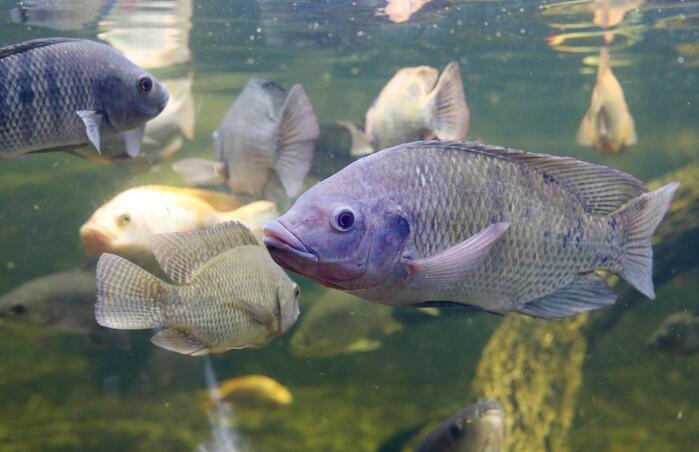
Picture 1: Tilapia fish swimming in a pond (Photo Credit: University of Edinburgh)
Date of Input: 11/07/2024 | Updated: 11/07/2024 | hidayahanum
MEDIA SHARING