Article Prepared By: Izwaharyanie Ibrahim
Source: Energy Conversion and Management (Elsevier)
In the quest for sustainable energy solutions, researchers are increasingly looking towards innovative methods that integrate renewable energy generation with environmental benefits. One such cutting-edge approach has emerged from a recent study led by scientist Negar Gol from Islamic Azad University, Iran, along with her research team from Seoul National University, South Korea, who have developed a semi-transparent photovoltaic bioreactor (STPV-PBR) for the simultaneous cultivation of microalgae and electricity generation (Figure 1).
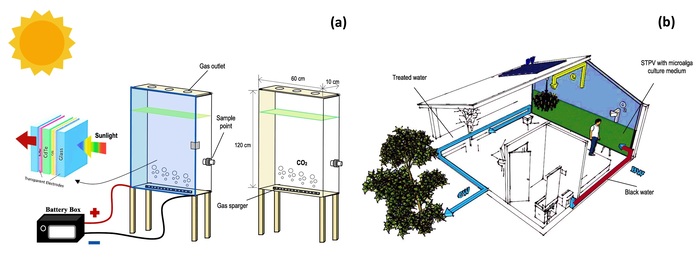
Figure 1: Schematic of (a) of architecture of STPV-CdTe cell, STPV-PBR setup and Glass-PBR setup and (b) schematic of the potential application of the STPV system in residential building.
A Dual Solution: Renewable Energy and Wastewater Treatment
The STPV-PBR incorporates microalgae cultivation with photovoltaic technology, offering a unique solution to two pressing global challenges: the need for clean energy and efficient wastewater treatment. By utilizing semi-transparent cadmium telluride (CdTe) solar photovoltaic modules, the researchers maximized biomass production rates while generating significant amounts of electrical energy.
- Enhanced Biomass Concentration
- The study demonstrated that the biomass concentration of microalgae such as Chlorella sorokiniana and Chlorella vulgaris increased by 15% and 18%, respectively, when cultivated in the STPV-PBR compared to traditional glass photobioreactors (Figure 2a).
- This was attributed to improved light quality and thermal conditions within the reactor.
- Effective Wastewater Treatment
- The microalgae not only produce energy but also play a crucial role in treating wastewater.
- The study indicated substantial nutrient removal efficiencies, showcasing the potential for microalgal cultivation to address the growing concern of wastewater pollution.
- Sustainable Energy Generation
- Over the course of the study, more than 37 kWh/m² of electrical energy was generated, sufficient to power essential operations (Figure 2b).
- This innovative system not only aids in energy generation but also paves the way for its potential application in building facades, enhancing urban sustainability.
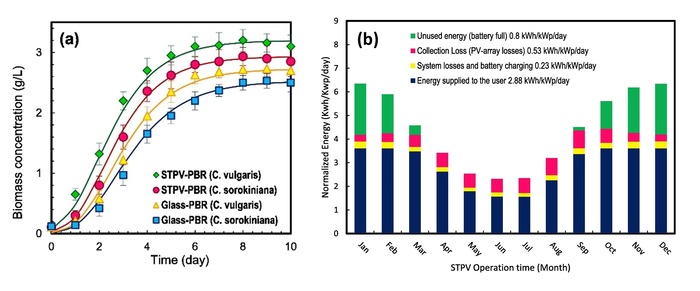
Figure 2: (a) Variation of biomass concentration. (b) Normalized energy production per installation: (nominal power 40 Wp).
The Future of Sustainable Architecture
This research opens new avenues for sustainable building design (Figure 3). By integrating STPV systems into architectural structures, buildings can become self-sustaining environments, reducing reliance on external energy sources while improving air quality through natural wastewater treatment processes.
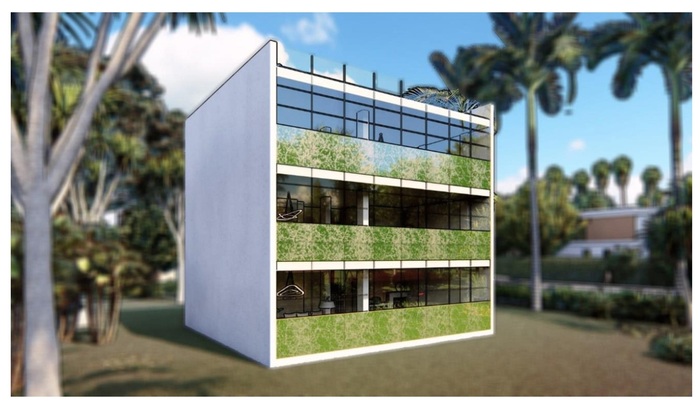
Figure 3: Schematic of the application of STPV-PBR as building façade.
Conclusion
The innovative application of semi-transparent photovoltaic technology in microalgae cultivation stands as a testament to the potential of merging renewable energy with biological processes. The findings from this research pave the way for future exploration into scalable applications, especially in urban settings facing pollution challenges.
For more information on the study and its implications, you can access the full research paper here:
https://www.sciencedirect.com/science/article/pii/S019689042401358X
Date of Input: 12/02/2025 | Updated: 12/02/2025 | izwaharyanie
MEDIA SHARING