Article by: Nur Hidayahanum Hamid
Source: Transactions of the American Fisheries Society
Flathead catfish, an invasive species native to the Mississippi River basin, have significantly impacted the Susquehanna River since their detection in 2002. Now the apex predators in the river, they grow up to 4 feet long and nearly 70 pounds, preying on a wide range of aquatic species and disrupting local food webs.
A study published in Transactions of the American Fisheries Society conducted by researchers from Penn State, the Pennsylvania Fish and Boat Commission, and other organizations analyzed the diet of flathead catfish in the Susquehanna River basin. Using DNA barcoding, researchers identified 47 prey species, including rusty crayfish (another invasive species), Margined madtoms (a conservation concern), and species of recreational importance like smallmouth bass and walleye. Larger flatheads primarily consumed fish, while smaller ones ate a mix of invertebrates and fish.
These findings provide essential insights for fisheries managers to address the ecological challenges posed by flatheads. The study highlights the dual role of invasive species like flathead catfish and rusty crayfish in reshaping aquatic ecosystems, largely attributed to human actions such as angler transport.
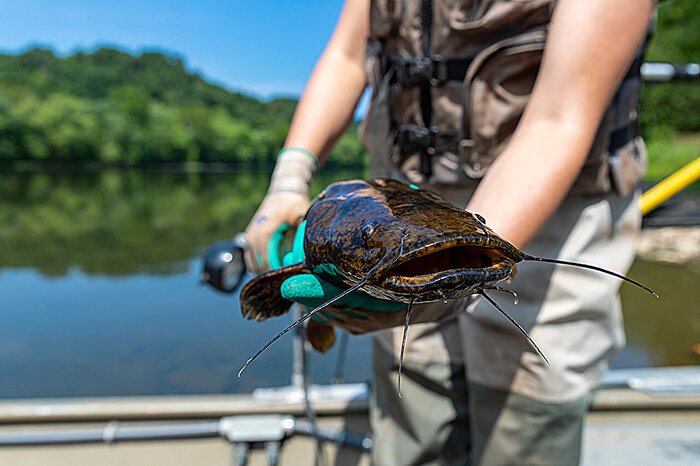
Picture 1: To determine what the flathead catfish were eating, researchers collected 576 of them over two years, with 241 individuals having recoverable stomach contents. The researchers extracted DNA from those contents and identified prey tissues. Credit: Julian Avery/Penn State

Picture 2: The study area in the Susquehanna River basin, Pennsylvania, where flathead catfish were collected for dietary analysis. Shapes denote collection methods: diamonds represent high-frequency electrofishing, triangles represent hoop nets, circles represent low-frequency eiectrofishing and the square represents the fish lift at the Conowingo Dam. Credit: Penn State.
Date of Input: 03/12/2024 | Updated: 03/12/2024 | hidayahanum
MEDIA SHARING