Article prepared by: Dr. Izwaharyanie Ibrahim
Source: Elsevier - Journal of Hazardous Materials
Per- and polyfluoroalkyl substances (PFAS), commonly known as “forever chemicals”, have become an increasing environmental concern due to their persistence and widespread occurrence in water resources. Recent research has revealed that PFAS contamination may not only affect environmental quality but could also influence the spread of antibiotic resistance genes (ARGs) within urban water systems.
Urban water systems, which include wastewater treatment plants, rivers, drinking water treatment plants, and tap water supplies, play an essential role in providing safe water for communities. However, these systems are increasingly exposed to emerging contaminants such as PFAS and antibiotic-resistant microorganisms.
PFAS in Urban Water Networks
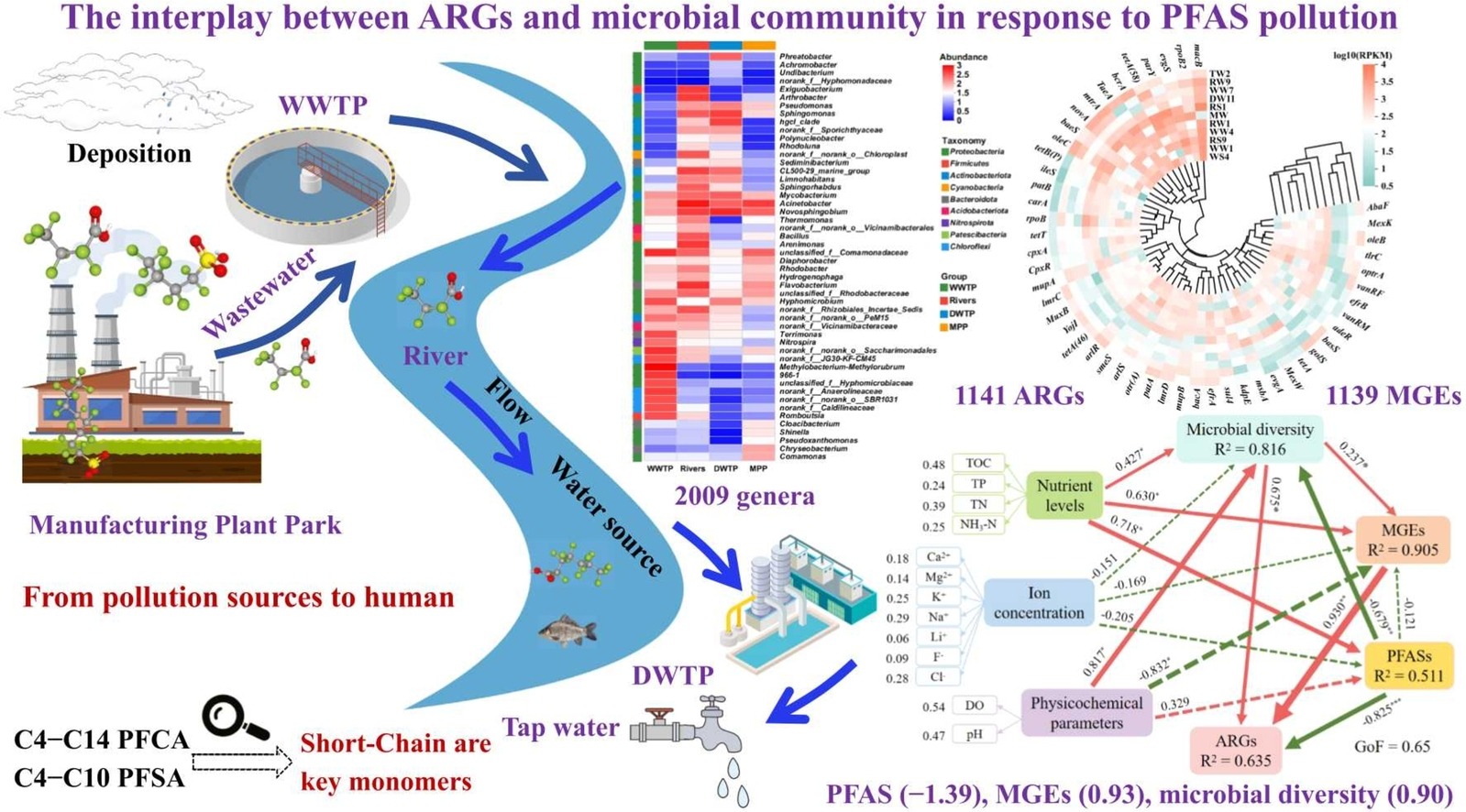
A recent study investigating industrialized urban water systems found that PFAS were present throughout the entire water pathway, from industrial wastewater to treated drinking water. Short-chain PFAS compounds were identified as the dominant pollutants due to their high mobility and resistance to conventional treatment processes.
The study showed that wastewater treatment plants can act as both sinks and sources of PFAS. In some cases, PFAS concentrations increased after treatment, indicating that current treatment technologies may not effectively remove these contaminants.
Impact on Microbial Communities
Microorganisms play an important role in maintaining healthy aquatic ecosystems and supporting water treatment processes. However, elevated PFAS concentrations were found to reduce microbial diversity, particularly in river systems receiving wastewater discharges.
Reduced microbial diversity may weaken ecosystem resilience and alter natural biological processes that help maintain water quality.
Antibiotic Resistance Genes and PFAS
One of the most significant findings of the study was the detection of more than 1,100 antibiotic resistance gene (ARG) subtypes and over 1,100 mobile genetic elements (MGEs) throughout the urban water system.
ARGs are genetic materials that enable bacteria to resist the effects of antibiotics. Their spread has become a major global public health concern because antibiotic-resistant infections are increasingly difficult to treat.
Researchers discovered strong relationships between PFAS contamination, microbial communities, and ARG distribution. Higher PFAS concentrations were associated with changes in microbial composition and gene transfer processes that influence the abundance of ARGs.
Why Does This Matter?
The coexistence of PFAS contamination and antibiotic resistance in urban water environments presents a new environmental challenge. While PFAS are known for their persistence and potential health risks, their interaction with microbial communities may indirectly influence the environmental spread of antibiotic resistance.
This finding highlights the importance of monitoring not only chemical contaminants but also biological indicators in water systems.
Moving Towards Safer Water Management
The study emphasizes the need for integrated monitoring programmes that assess PFAS, microbial communities, and antibiotic resistance simultaneously. Improving wastewater treatment technologies and strengthening pollution control measures can help reduce the movement of these contaminants through the environment.
Continued research is essential to better understand how emerging contaminants interact within aquatic ecosystems and how these interactions may affect human health.
Conclusion
PFAS contamination extends beyond chemical pollution alone. Emerging evidence suggests that PFAS can alter microbial communities and influence the distribution of antibiotic resistance genes in urban water systems. Strengthening environmental monitoring and adopting advanced water treatment strategies are crucial steps to safeguard ecosystem health and ensure safe water resources for future generations.
References
- https://www.sciencedirect.com/science/article/pii/S030438942600868X
- Pengarah I-AQUAS
- Timbalan Pengarah I-AQUAS
- Ketua Laboratori Ekosistem dan Pengurusan Akuatik
- Ketua Laboratori Akuakultur Mampan
- Web I-AQUAS UPM
- Siswazah I-AQUAS
- â â Web Universiti Putra Malaysia
- â â Kementerian Pendidikan
- Jabatan Perikanan Malaysia
- Mosti Malaysia
- â Research officer- Mohd Fakhrulddin Ismail
- Research Officer – Dr. Izwaharyanie Ibrahim
- Research Officer – Dr. Nur Hidayahanum Hamid
- Media Sosial I-AQUAS – Tiktok
- Media Sosial I-AQUAS – Twitter
- Media Sosial I-AQUAS – Facebook
- Media Sosial I-AQUAS - Instagram
- Media Sosial I-AQUAS - Youtube
- Google Place
Date of Input: 03/06/2026 | Updated: 20/08/2026 | nsyahirah
MEDIA SHARING