Article by: Nur Hidayahanum Hamid
Source: University of California - San Diego
A study published in PLOS ONE revealed that nearly a quarter of fish in a creek flowing into San Diego Bay contain microplastics. Researchers, led by Theresa Talley from Scripps Institution of Oceanography, examined coastal sediments and three fish species, finding that the type and frequency of plastic ingestion varied with species, size, and age of the fish. The study suggests that species' feeding habits and diets over their lifetimes influence contamination levels.
The research highlights how urban watersheds, particularly rivers, are significant conduits for plastic pollution from land to sea. There are still unanswered questions about how plastics break down, affect wildlife, and move through food webs, impacting humans who consume seafood.
Talley and her team focused on Chollas Creek, a highly urbanized area, and found 25 types of plastics in sediments, with fibers and hard and soft pieces comprising 90% of fragments. Fish consumed about half these plastic types, with synthetic fibers and hard pieces being most common. The study noted species-specific differences in plastic ingestion; for example, California killifish often ingested microbeads.
The study underscores the need for a better understanding of plastic pollution's entry into food webs to mitigate risks to sea life and humans.
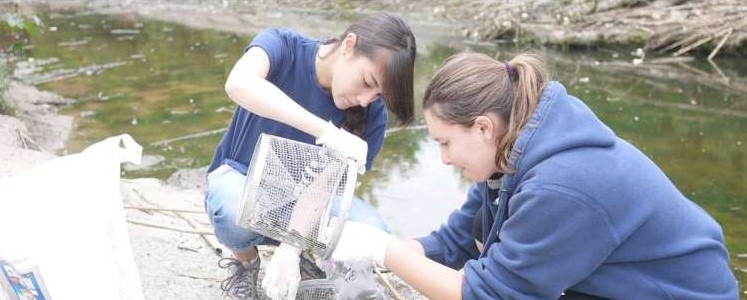 Picture 1: Allison Malunes (left) and Rachel Whelan (right), who worked on this project as students, collect fish from Chollas Creek. Credit: Nina Venuti
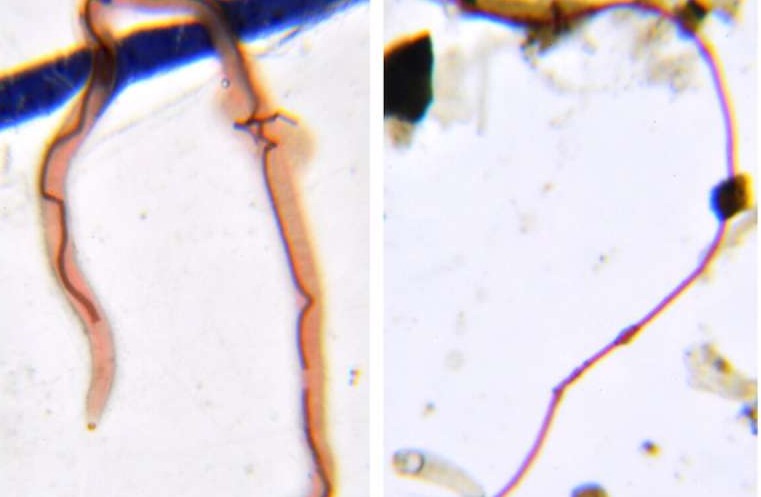
Picture 2: Top: Microscopic images of red algae (left) and a red plastic fiber (right) collected from the California killifish stomachs. Bottom: Top is a filamentous green alga, and bottom is a green plastic microfiber, both collected from the stomachs of the sailfin molly. Credit: Theresa Talley
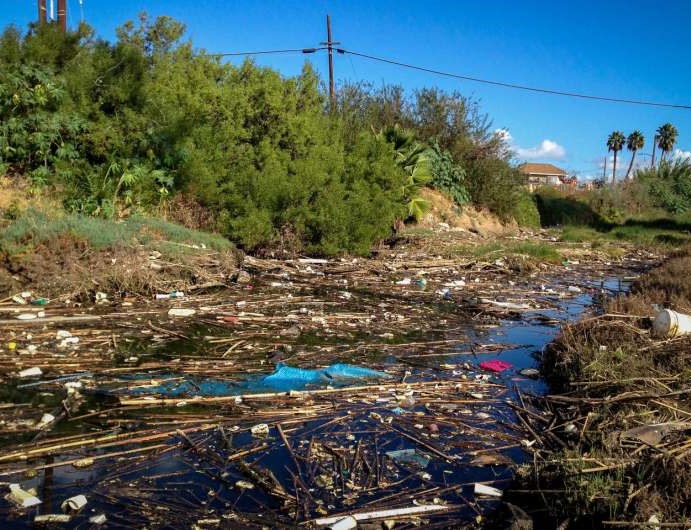
Picture 3: The study site, Chollas Creek in San Diego. Credit: Theresa Talley
Date of Input: 01/10/2024 | Updated: 01/10/2024 | hidayahanum
MEDIA SHARING