Article by: Nur Hidayahanum Hamid
Source: CNRS
Phytoplankton are vital plant microorganisms in marine ecosystems, contributing to climate regulation by absorbing atmospheric COâ‚‚ and producing half of the Earth's oxygen through photosynthesis. However, the mechanisms controlling their distribution remain unclear. A recent study by CNRS and Sorbonne University researchers examined the light perception of diatoms, a phytoplankton group, revealing their use of genome-encoded light sensors called phytochromes. These photoreceptors detect changes in the light spectrum, aiding diatoms in determining their vertical position in turbulent waters and optimizing biological activities like photosynthesis.
Analysis of genomic data from TaraOceans' marine sampling campaigns found that only diatoms in regions beyond the Tropics of Cancer and Capricorn possess phytochromes. These areas, marked by significant seasonal changes and varying day lengths, suggest phytochromes help diatoms measure time and adapt to seasonal cycles. This capability is critical in temperate, high-latitude, and polar regions, where water mixing is intense.
The study underscores how diatoms detect and respond to light, offering insights into their environmental navigation. It highlights the importance of combining laboratory research with field studies to understand marine ecosystem dynamics and the adaptive mechanisms of organisms facing environmental changes. The research involved collaborations between CNRS, Sorbonne University, the TaraOcean Foundation, and the Zoological Station Anton Dohrn of Naples, with support from the Bettencourt Schueller Foundation and Dynamo Labex. These findings enhance our understanding of phytoplankton’s ecological roles and resilience in a changing climate.

Picture 1: Diatoms are unicellular photosynthetic algae, with a silicious skeleton. They belong to the phytoplankton family. Credit: John Dolan/CNRS Images
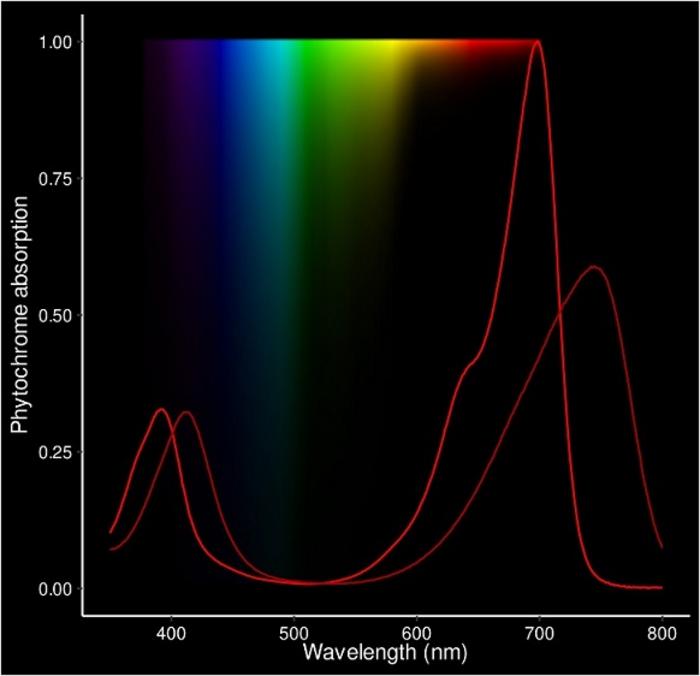
Picture 2: Distribution and spectral composition of light in the water column, representation of the spectrum of the diatom phytochrome, which can detect information associated with light changes in the ocean. © Carole Duchêne/Chloroplast Biology and Light-sensing in Microalgae Laboratory (CNRS/Sorbonne University)
Date of Input: 07/01/2025 | Updated: 08/01/2025 | hidayahanum
MEDIA SHARING