Article by: Nur Hidayahanum Hamid
Source: Virginia Institute of Marine Science
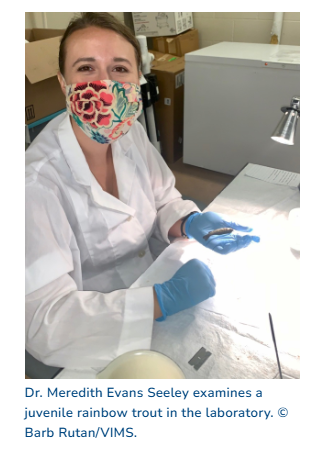
Microplastics—tiny plastic particles formed through degradation—pose significant ecological and health risks, and new research shows they can also exacerbate infectious diseases in aquatic animals. A study led by Dr. Meredith Evans Seeley at the Virginia Institute of Marine Science (VIMS), published in Science of the Total Environment, reveals that microplastics increase the severity of Infectious Hematopoietic Necrosis Virus (IHNV), a viral disease that affects salmonids such as rainbow trout and chinook salmon.
The team, which included VIMS professors and technical staff, exposed rainbow trout to various concentrations of microplastics—specifically polystyrene foam, nylon fibers, and Spartina fragments—followed by exposure to IHNV. The findings showed that fish co-exposed to microplastics and IHNV experienced significantly greater disease severity, with nylon microfibers having the most pronounced effect. Researchers believe these synthetic particles physically damage fish gills and gut linings, making them more vulnerable to viral infections.
The study highlights that synthetic microplastics (nylon and polystyrene) pose a greater risk than natural ones due to their size, structure, and abrasiveness. The results emphasize the need to consider the combined effects of microplastics and environmental stressors, rather than studying them in isolation.
Importantly, the implications extend beyond aquaculture. Co-exposure of organisms to microplastics and pathogens may worsen disease outcomes in wild aquatic species, birds, corals, and even humans.

Picture 1: When exposed to the virus only (blue particles in left-hand panel), the barrier formed by the intact lining of the gill and gut may block some virus from penetrating the tissues. When exposed to small microparticles derived from polystyrene or Spartina marsh grass (orange “suns” in center panel) and then virus, the barrier may be physically damaged, allowing more virus to enter and causing an inflammatory response. Damage appeared to be greatest for nylon microfibers (purple rods in right panel), which are larger and may be more likely to become trapped in and damage the barrier. This may allow greater viral entry and generate stress in the fish, ultimately increasing viral virulence. Illustration not to scale. © Dr. Meredith Seeley/VIMS


Date of Input: 02/05/2025 | Updated: 11/11/2025 | hidayahanum
MEDIA SHARING